
Powell Deeds by Instrument Type
The Powell County Clerk records deeds and every related land instrument. Name the event before you search. A sale, a correction, an estate transfer, a court sale, an easement, or a lot change may carry its own label in the books. The instrument type controls what the document actually does.
| Deed Type | What It Does | Common Use |
|---|---|---|
| Warranty deed | Conveys land with stated covenants | Ordinary sale |
| Quitclaim deed | Conveys only the interest a grantor may hold | Family transfer or cleanup |
| Correction deed | Repairs a stated error in an earlier record | Name or description correction |
| Commissioner's deed | Implements a court-supervised sale | Foreclosure or partition |
| Affidavit of descent | Records facts used in an estate chain | Death-transfer research |
Not every recorded paper transfers land. A mortgage or lien burdens it instead. Later releases or assignments clear the way. Trusts, estates, spouses, entities, and powers of attorney all surface in Powell deed records too. Read each party's stated role. Also review the full legal description before drawing conclusions.
Powell eCCLIX Access Limits
The Clerk records page connects Powell deed records to eCCLIX. Private citizens get Powell-only access with five free searches per day. Commercial users must subscribe. A generic account page has shown conflicting language about zero searches and restricted hours, so trust any live notice and call the Clerk when the wording differs.
| Index Detail | Published Finding | Best Response |
|---|---|---|
| Search fields | Public search described; exact fields not captured | Prepare party and entity variants |
| Coverage start | Not published | Ask about older deed books |
| Images | Completeness not confirmed | Request the recording reference |
| Daily access | Five searches stated locally | Save a conflicting notice |
Work out your owner, spouse, entity, estate, prior-owner, lender, and year searches before logging in. An index hit only starts the inquiry; the recorded image holds the operative terms. The Powell Clerk records screen lists the official eCCLIX link, forms, and DOC ALERT routes.
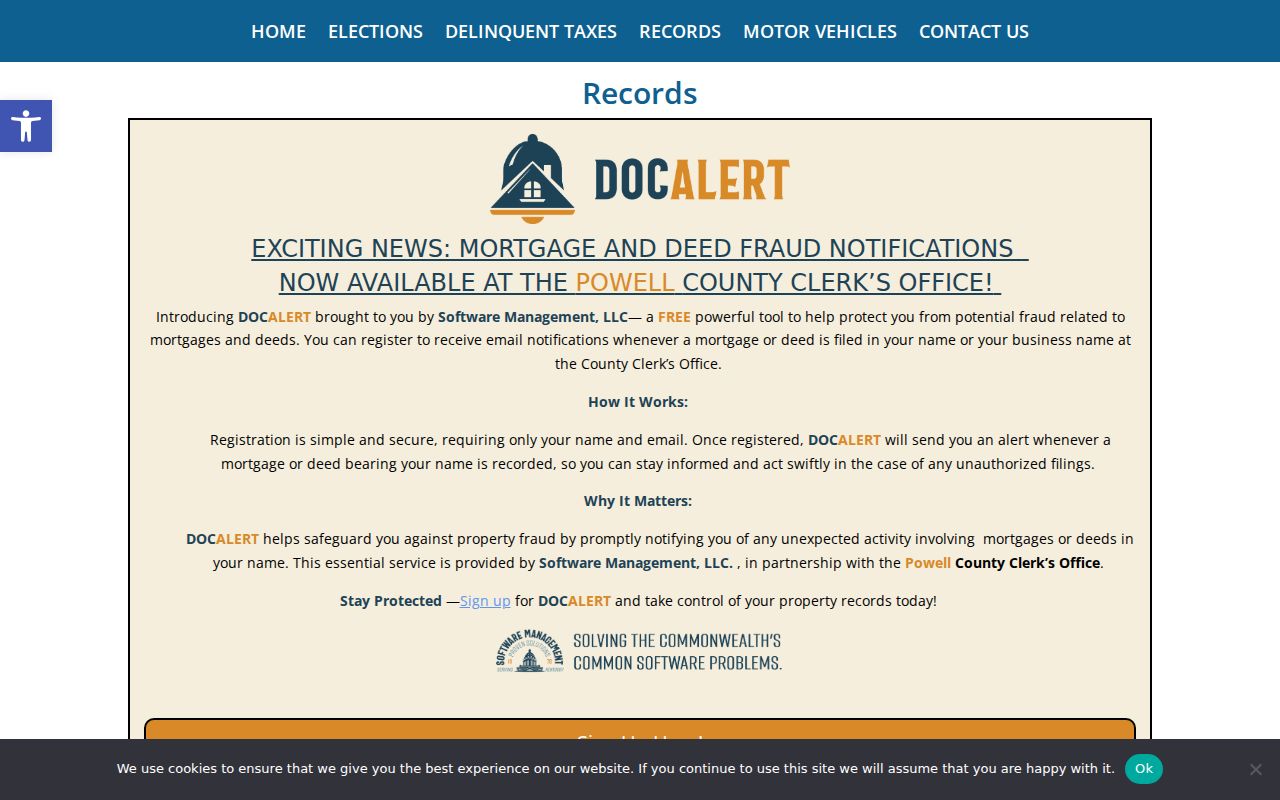
That official records screen marks the entry point. The Clerk can confirm index dates and image coverage.
Powell Instrument Search Terms
The Clerk's fee list doubles as a vocabulary guide. Beyond deeds it names mortgages, assignments, releases, easements, contracts, restrictions, mechanic's liens, tax liens, leases, mineral leases, fixture filings, plats, judgments, and powers of attorney. Let the land's history suggest which instruments to search.
- Pair mortgages and liens with release searches.
- Check easements and restrictions for access or use questions.
- Use plats for lots, blocks, phases, and subdivisions.
- Search correction deeds when a name or description shifts.
- Review court records when a commissioner or judgment appears.
A filed mortgage does not prove a debt still stands. A tax certificate likewise does not prove its purchaser owns the property. Later releases, redemption, litigation, and deeds decide what actually followed.
Clay City's Historic Deed Clues
Clay City's official history offers unusual search terms for old Powell County deed records. Waltersville, Collins Forge, Red River Iron Works, creek names, and vanished roads appear where no modern street number exists. The post office carried a different name before Clay City incorporated in 1890. Treat these words as leads, not proof a current tract sat inside an industrial site. Match the parties, acreage, parent-tract calls, and later deeds. Search the historic term, then return to the physical description.
Powell's Grantor-Grantee Chain
A grantor conveys an interest; a grantee receives it. The deed index organizes those party roles. The recorded deed supplies the real terms. Start from the newest verified owner and match the land itself at every step backward.
- Search the current assessed owner as grantee for an acquiring deed.
- Read its grantor, legal description, date, and prior reference.
- Search that grantor as an earlier grantee, including name variants.
- Repeat while matching acreage, calls, and parent tract.
- Search forward for corrections, later deeds, and releases.
- Grantor
- The party conveying the stated interest.
- Grantee
- The party receiving it.
- Chain of title
- The linked sequence of instruments affecting title.
- Book/page
- A traditional location in recorded volumes.
- Instrument number
- A unique filing identifier when assigned.
Repeated family names and entity changes invite false matches. Compare legal description, date, capacity, and prior reference rather than the name alone.
Powell Plats and Corrections
A plat records a subdivision's lots, blocks, roads, and easements. A deed may adopt it by name and book reference. Stanton adds an approval trail. Planning Commission approval must appear in writing on subdivision, lot-line, or corrected-description documents. The Clerk will not record them otherwise. Pull both the recorded document and the Stanton planning file. The file may hold a survey and adjoining-owner notices. It may also hold staff comments and the reason for a correction. An agenda item is not final approval; find the signed action and its recorded reference.
Older Powell Deed Books
eCCLIX publishes no earliest date or full image range. Older Powell deeds may live in Clerk volumes. They may sit on microfilm. Or they may appear through the Kentucky archives research guides. Send archive requests with every party and an approximate year. Include former road or place names, acreage, the parent tract, and any known book and page. Expect four to six weeks. A catalog entry proves a series exists. It does not prove that every year is online or every image is legible. Keep the custody note and mark where the digital index stops.
The Clerk stays the county recorder. A historical catalog or film may give you the first lead, but the office still holds the record. Ask where the original volume sits. Ask whether a direct or reverse index exists. Ask how to order a copy and whether later instruments have been digitized. A library map or an old newspaper can decode a forgotten road or business name. It cannot decide title. Return every historical clue to the deed book, the legal description, and the later chain.
DOC ALERT for Powell Owners
DOC ALERT notifies a registered name or business when a mortgage or deed is filed, and the Clerk reports it is free. This human-use feature can flag an unexpected filing, though a typo or an entity variation may slip past a match. The official Powell DOC ALERT screen walks through the name-based enrollment route.
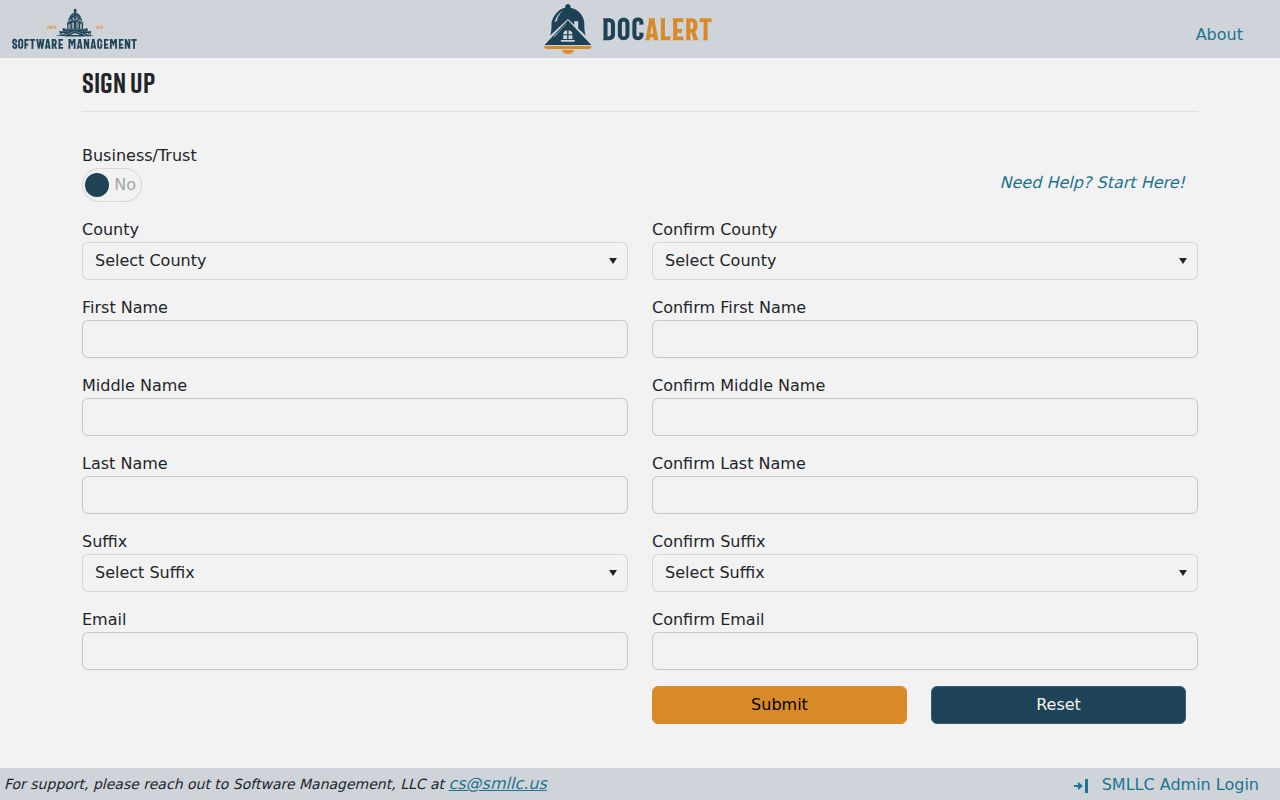
Alerts support fraud monitoring. They cannot certify every instrument touching a parcel. An alert is not a title report, so keep periodic Clerk index checks and retain the deed records that matter.
Order a Powell Deed Copy
Start with the recording reference, then reach the Powell County Clerk for online images, counter service, or mail orders, in either ordinary or certified form. The office sits at 525 Washington Street, Room 109, Stanton, PO Box 548, and answers at (606) 663-6444. Weekday hours vary. Thursday runs short. Call before you plan a visit.
Deed recording itself costs $50 for the first five pages and $3 for each added page, plus a listed $1-per-$1,000 property tax when it applies. That filing fee covers recording, not copies. Ask the Clerk for a current copy quote.
Recorded, not guaranteed. Powell deed records show filed instruments, not a title opinion. Later instruments, court orders, and unrecorded interests may matter.
A short index line never tells the whole story. The recorded image carries the signatures, capacities, exceptions, consideration language, legal description, and prior references that an index entry omits. Read every attached page. Compare each prior recording reference before deciding the document truly belongs to the tract.
A complete request should say whether exhibits, riders, legal-description pages, and certification are needed. eCCLIX sometimes returns only an index line. That thin result cannot confirm acreage, reservations, marital capacity, or signing authority. Ask instead whether the full image is available online, at the counter, by mail, or in another stored format. Keep the exact book and page or instrument number.
Once the image arrives, check its grantor, grantee, execution and recording dates, consideration wording, source-of-title reference, and legal description. Measure each element against the tract under study. Correction deeds and later releases count as separate instruments. A mortgage lacking a visible release calls for more index work. A deed followed by a court order does too. The chain cannot be summarized until that work is done. Older volumes may require a direct inquiry to the Clerk. Research help from KDLA or a catalog lead may serve instead of a web image. Hold onto every returned reference, even one that looks unrelated. An easement, mineral reservation, plat, affidavit of descent, or power of attorney may matter. Any of them may explain the next link in the land history.
Contact details deserve extra care. The direct Clerk website and the county government's elected-official page can show different officeholder information. Use the direct records and contact pages for routing, mention the discrepancy when a named official matters, and confirm by phone. The direct schedule also varies by weekday. A mailed request should include the instrument reference, party names, document type, recording date, preferred copy type, and return contact. Ask for the current fee before payment.